Monday, October 8, 2012

Cropping Your Photos

After taking a flash card full of photos, the next step is downloading them into your computer to see if they remotely resemble the perfect compositions you envisaged while you were taking them.

After adjustments for brightness and contrast, and sometimes color correction, the most helpful step that can be taken for a better digital photo is cropping. You can accomplish a lot by resetting the picture boundaries --by what you include and what you don't include in the finished product.


Hopefully we have taken into account lighting conditions, the angle of the shot, and composition within the shot. Once we have these variables under control, we have the basic requirements for a good photo. The gorgeous tree peony blooms have all the required components, but are somewhat swallowed by their surroundings.

Cropping puts the peonies front and center.


Above is a rather confused grouping of peach-pink iris.


Cropping imposes structure and gives the composition a flow and focus.  If you don't have cropping software, try Picasa, a great free download, for organizing and editing your photos, at http://picasa.google.com/


Above is blue-eyed grass, a picture taken for identification purposes. The dry, cracked, and littered dirt around the plant didn't do much to set the plant off, even if it is for identification purposes.


The same photo cropped and brightened to take as much extraneous background out as possible. Now you concentrate on the plant without distractions.


The famous Stargazer lily, above, looking dark and overwhelmed in its underexposed surroundings


Cropping and contrast adjustment brings out the brightness and and makes it the star of the show


An crowded and unimproved shot of sunflowers and tules (bulrushes), above.


Cropped to cut away dead and dying flowers, create balance, and put the emphasis on the bright yellow.


While a nice shot of white bleeding heart, above, the cropped photo, below, takes away some of the busy-ness and distraction of the surrounding foliage.


I love cropping - an essential part of getting the very best shot you can.


Also see:

How to Crop Images  Digital Photography School

Friday, October 5, 2012

Just Roses

My house was built on what was once a corn field. I was told that roses grow well wherever corn can grow, which gave me the confidence to actually try them out. Since a neighbor let me dig up my first starts of Austrian Copper and the Harrison's Yellow old-fashioned roses--until they became so huge I had to remove them from the garden--roses have been among my favorites. They are not only stunningly beautiful, but often they are in bloom when nothing else is.


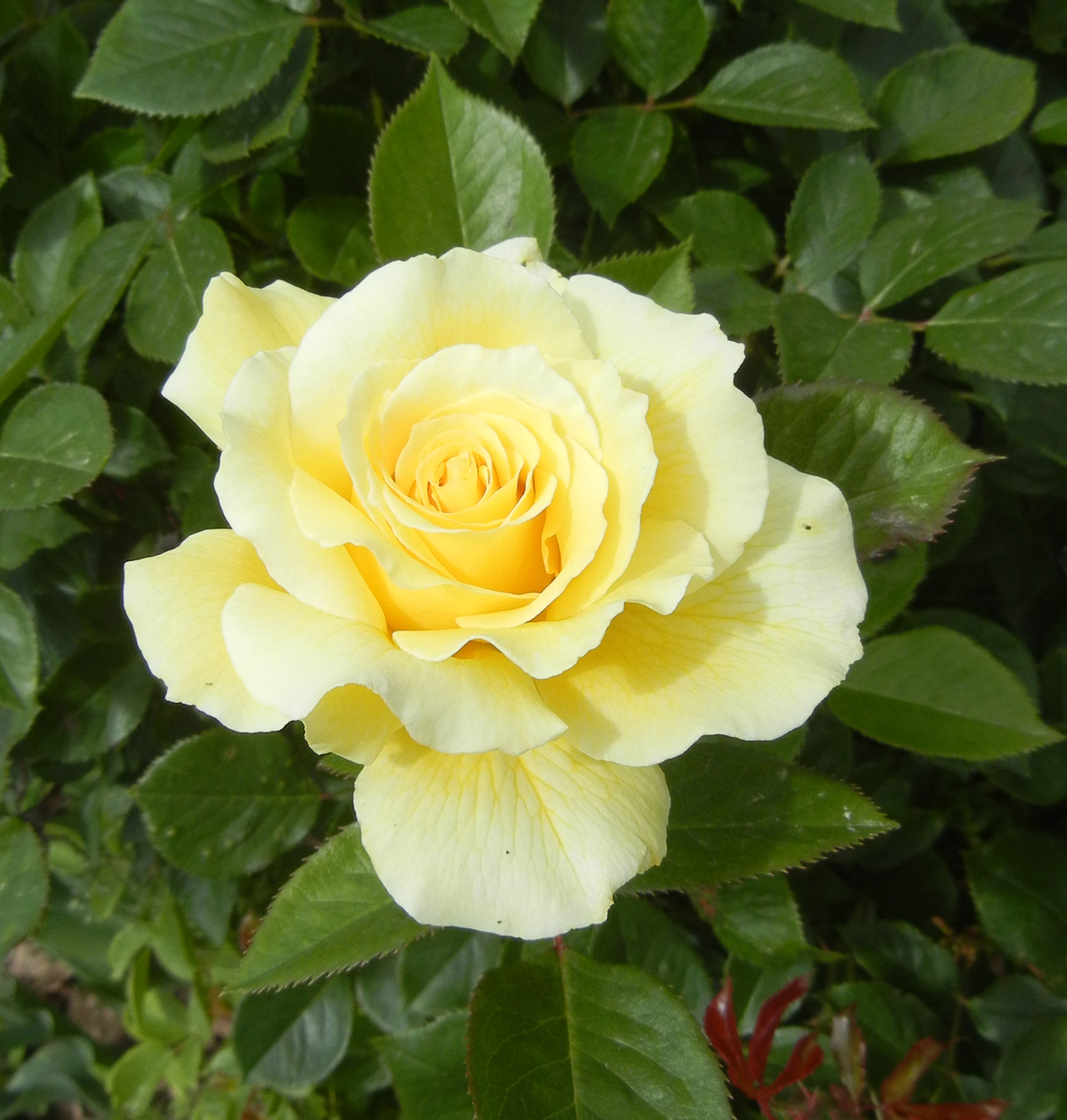
I haven't been growing White Licorice, above, very long, but it has zoomed to the top of the list of favorite roses. I love everything about this rose--its banana-cream color, the perfect hybrid tea blossom form, its fresh fragrance, and the clean, perfect foliage and mounded plant habit.


Another of my very favorites, the Easy Does It rose. This blooms constantly. A photograph can't capture its changing color and ruffled, scalloped blossoms.


The indispensable floribunda shrub Iceberg. These grow so large for me I have had to dig them out completely. I keep trying different spots that can handle such a shrub, but I will never be without it. Tall and even wider, perfectly hardy, with nearly thornless canes and persistent fragrance, this is the perfect white cutting rose to blend  in a vase with other, brighter blooms.


Perfectly formed, shrimp-pink Sheer Magic hybrid tea


Brilliant orange-red Cinnamon Twist roses glow in my back door garden


The loveliest  of gold roses, Honey Perfume. Meltingly beautiful with soft appealing color. These bloom in bursts, June and then several months later


Hot Cocoa, another uncapture-able shade of orange with chocolate overtones


Sweet Juliet, a fragrant David Austin rose


Dainty Bess, the charming single rose that has been around since 1935


David Austin Heritage rose, a very strong grower for me. Tall , wide, and generous, during June it is covered with hundreds of the most perfect old-fashioned, fragrant blossoms, with scattered bloom during the rest of the season.


Dreamweaver, the modern pillar rose with blooms the size of peonies


The aptly named Voluptuous rose. Perfect in form and large in plant stature, it is covered with these fuchsia-colored blooms all season.


The antique Bourbon climber Zephirine Drouhin, circa 1868. Neon pink roses burst into bloom on arching canes in the spring, with scattered blooms the rest of the summer.


Antique in form, the beautiful Pure Perfume quartered white rose


Antique hybrid musk Ballerina that leans over the fence so charmingly

Is it any wonder we are in love with roses?


Color Themes

I seem to have a talent for planting perennials and annuals next to each other, and finding out when they bloom that they are all the same color shade! I prefer complementary plantings in warm and cool shades, so I usually dig up matching bloomers and spread them around the garden.

Since I live in the high desert with summer temperatures in the 100 degrees, I tend to favor cool palettes in both the shade and sunny borders.


 Above, a lovely combination of spiky lavenders and darker salvia.


Three all-stars from the mint family - white perennial salvia Snow Hill, mauve-pink Teucrium Chamaedrys, known as the herb Germander, and blue nepeta, the Walker's Low catmint. These make an unbeatable combination because of similar trouble-free plant habits, and because all three plants bloom the entire summer and into the fall.


Tissue-paper cups of the prairie mallow Party Girl, here complemented by the darker pink shades of Rocky Mountain winecups. 


Full-sun mid-summer plants in subtle shades, including a pink echinacea and the species licorice mint Agastache Rupestris.


A nice combination in the mid-summer border, including Husker Red penstemon with its frilly white icing flowers on a sturdy red-leaved plant; the blue Rozanne geranium, Cinco de Mayo single roses, and a tall red lily.


Warm-colored roses in the sunny border. White always makes a good transition between color schemes.

Thursday, October 4, 2012

Insects

Any plant photography will naturally lead to insect photography. I have come to admire some insects because of their personalities and their intrinsic natural beauty. I generally use a macro setting and take as many pictures as possible, from as many different angles as I can, until they finally fly off. You may want to make sure that the shutter "sound" on your camera is turned off, so it won't scare the insects away.

The following are from my collection of insect photos:


The bee on the caryopteris makes the plant study much more interesting


Checkered butterfly among the veronica


Monarch butterfly on the broccoli


Swallowtail on the phlox Miss Lingard


Dragonfly near the pump pond


This dragonfly paused to smile at me


This fellow posed so I could admire him all the better


Dragonfly wings 


A really sad looking horsefly

For more information, trying the following website:
 http://www.ephotozine.com/article/tips-and-tricks-for-insect-photography-4874

Wednesday, October 3, 2012

Angle your shots

The angle of a shot can make all the difference. If you are trying to capture the personality of a flower, try it from one side or the other, from the top down--even if you have to get a chair to stand on, and even try it from the ground up.


I know it's hard to tell, but in the above picture I was trying to capture the Blonde Ambition ornamental grass with its little eyelash ruff held above the wiry green. But the busy background of the overly mature beebalm, crowding Cosmos foliage, the out-of-control pink gaura, and the too-bright sun defeated my purpose.


Instead, I found a downward looking angle and got this fun shot.


Here is a nice standard shot of the Bloodgood Japanese maple against the side of my house. Uninspiring and uninteresting.


The same tree but in closeup, backlit with the red leaves glowing translucent against the evening sun. A much more dramatic and interesting shot.

Tuesday, October 2, 2012

Take Many, Many Pictures

Below is a series of pictures I took of a swallowtail butterfly feeding among the scabiosa. I took picture after picture, most of which were deleted. These ones are the better photographs, although you can see problems in each of them. I finally found one that, when properly cropped, had the balance and composition I was looking for.


The picture above isn't bad, especially when the butterfly has wings wide open and an illuminating back light through the wings. The green foliage, blue scabiosa and white geranium is a nice backdrop to the yellow and black. But I don't like the angle of the butterfly on the flower, so I will keep taking pictures.


Here the angle is tilted enough that you can't see the full butterfly effect.


The balance is good, but the wings are not completely visible.


You can hardly even see the swallowtail colors. Often a side view of a butterfly is enough, but not in this case.


This is more like it. Good balance, colors pop, and the butterfly's wings are wide open and visible.


Here is the same picture, cropped for balance and composition. The focal point is the butterfly, even though it is not centered. The overall effect is of a candid garden shot that includes flowers, foliage, and swallowtail.