Monday, November 12, 2012

Impressionist Flower Effects in Photoshop

Photographs of flowers lend themselves to filter effects in Photoshop. The following three photos have had several filters and blending modes added to them to lend impressionistic effects that do not detract from the original color and light, and in fact enhance them.

click for larger photo
Purple iris take on an unearthly glow

click for larger photo

Above, Flower Carpet roses transmute into a sea of luminous coral

click for larger photo

Two-color photos like the lilac on the lawn, above, lend themselves to this sort of effect. To achieve it, try the filters and blend modes as outlined below:

click for larger photo

1) Open a photo in Photoshop. CTRL+J to duplicate the background layer.
I have renamed the layers here to help define what happens in each layer.
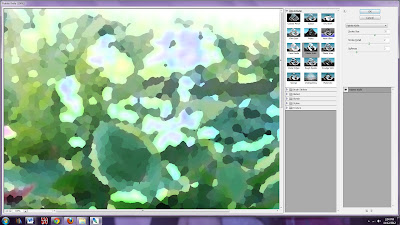

2) For the first background layer, go to Filter/Artistic/Palette Knife.  
I used these settings: Stroke=32; Stroke Detail=2; Softness=2


3) Your effect should be something like this.  Now duplicate CTRL+J the Palette Knife layer.


4)  Go to Filter/Artistic/Dry Brush. 
I used these settings: Brush Size=3; Brush Detail=8' Texture=1


5) Now duplicate the Background layer CTRL+J and drag the layer to the top of the layer stack
.

6) Go to Filter/Artistic/Poster Edges with these settings:
Edge Thickneess=2; Edge Intensity=1; Posterization=1.
Adjust the opacity of this layer between 30 - 50%. 


7) Duplicate the Poster Edges layer and apply the same settings.


8) Now apply Blending modes to each layer:
Palette Knife layer=Lighten
Dry Brush layer=Screen
Poster Edges=Multiply (adjust opacity)
Poster Edges copy=Multiply (adjust opacity)


9) Turn off the Background layer if desired, and keep adjusting the top two Poster Edges layers opacity until you have the effect you want.


10) The final Hostas photo with impressionist effects, above.


Saturday, November 10, 2012

"Think Like a Flower"

The following photos are borrowed from the Digital Photography School website Photographing Flowers by Elizabeth Halford, including comments and submitted pics at the end. The main tip is, get down close to where the flower lives, and experiment with not only macro, but zoom lens settings. Examples:


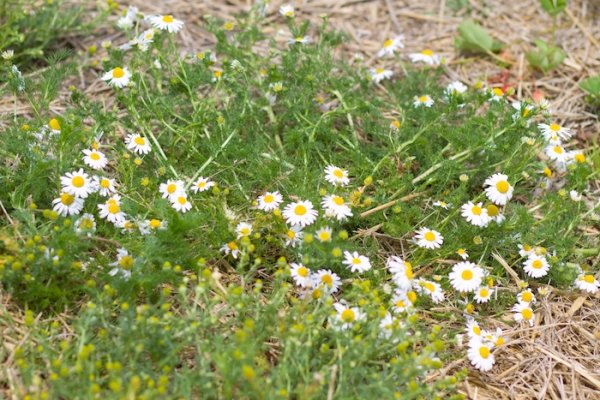
The patch of chamomile, above, doesn't tell the story the photographer wants to tell--it is too diffuse and far away.


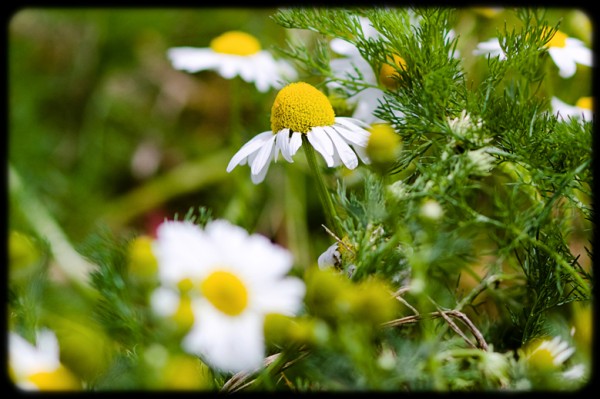
By taking the photo above, in context, by using a macro blur to focus in on the blossom with the downward-facing petals, the photograph resulted in highlighting the relationship of the flowers within the clump.


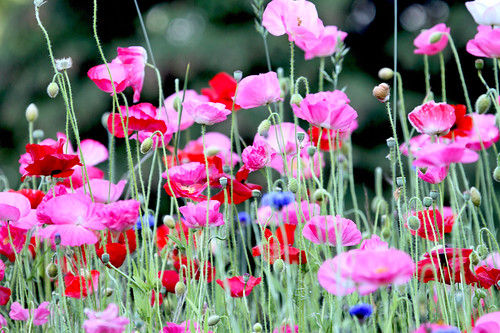
The shot above was taken using a DSLR, using a  zoom lens looking up from a point lower on the hill where the poppies were growing.


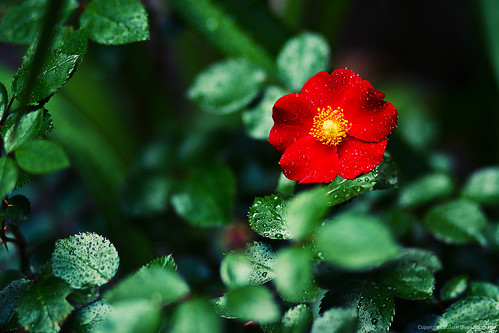
You don't need to use macro for close up shots. The five-petal red rose, above, was taken from 2 feet away using a zoom lens.


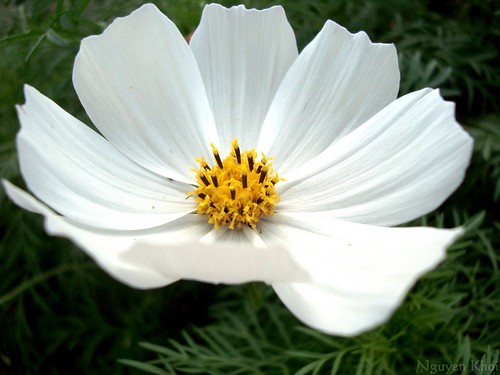
You don't necessarily need a DSLR, either. The clean white cosmos, above, was taken with a simple point and shoot camera.


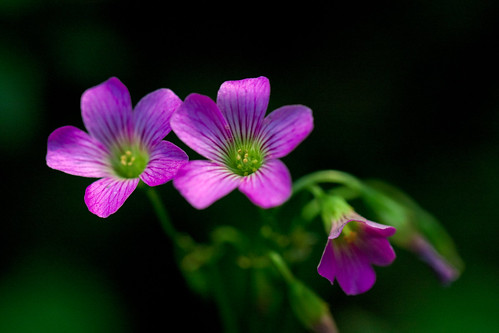
A fun close-up shot that tells the story of two upward-facing blossoms and one facing down.


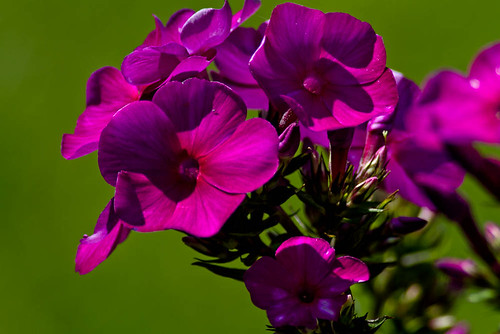
Another shot using telephoto, which does interesting things to the background of this bright pink phlox while allowing a close-up focus.


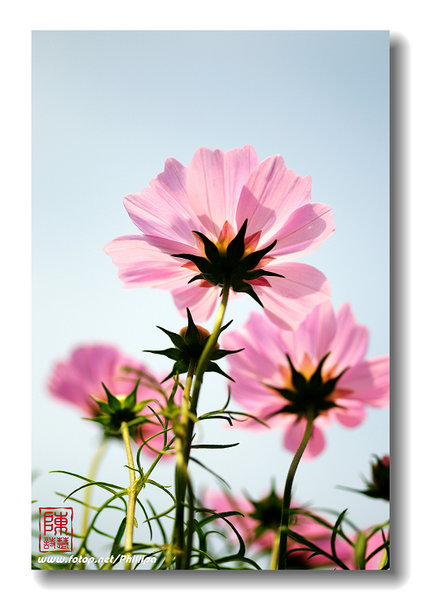
Beautiful ground-level shot of backlit pink petals.

See more submitted photos at Photographing Flowers - A How-To

Monday, November 5, 2012

Autumn Color

In the previous post, red is mentioned as the garden color that calls attention to itself. If so, then the fall season of the year brings out the star in plants that keep their role under wraps until the cold weather comes. Not only reds, but yellows, purples, lime-greens and earthy oranges and browns.


Dreamweaver rose hips shine bright orange-red in bunches


A volunteer barberry, complete with thorns, reveals its fall color


Amelanchier, the perfect red of the Serviceberry, or Juneberry tree. This is one of my favorite landscaping trees.


Bridal Veil spirea turns yellow and peach before it loses its leaves entirely 


My volunteer dogwood, now six feet tall and eight feet wide, grows under the cherry tree and rewards us with brilliant fall foliage


Even the peonies want to get into the act, here in striking yellow


Lily stalks turn purple


Dry hydrangea blossoms persist even in the rain


Another peony, this time in lime-green


Wet mahogany-hued Ninebark leaves provide texture alongside the spent blooms of a nearby butterfly bush

Photographing plants toward the very end of the season--in the cold and in the rain--can still be rewarding when it comes to capturing color and beauty.

Saturday, November 3, 2012

Royal Reds

Red attracts attention to itself, nowhere more than in the flower garden. It has to be used judiciously, but hints of red here and there throughout the garden can make it come alive.  Bright, velvet, eye-catching, commanding, dominating and enlivening--as well as a peerless accent and color enhancer. I love reds!


Red tulips light up spring bulb plantings


Breadbox poppies like stoplights in the garden


Early growth of the red-tip Photinia is a common sight all over the state of Oregon, where it grows readily.


Cinco de Mayo rose, usually shades of bright pink-red, shows more reddish in cooler weather. Red is such an intense brilliant color that shooting a photo in bright sunlight can result in high contrast and shadow.


The floribunda Cinnamon Twist, drawing attention to itself again. This was photographed in the shadow of a building so it would not reflect too much light.


One of the best of the Achillea Millefolium--Paprika, the intense red, drought-resistant and heat-loving milfoil yarrow 


One of many red roses in my yard. I have lost track of the varieties. They mostly grow very tall and very wide and are covered with these beauties.


Against the barbed-wire fence daylilies bloom in a smooth, dull, brick-red shade that matches the red-centered potentilla Miss Willmott growing up all around this corner of the garden. Miss Willmott spreads readily and reaches high, trying to be tall even though she is supposed to be a ground cover.


I couldn't resist including this photo of the annual salvia "Lipstick." It is a charmer wherever it is grown.


The Bloodgood Japanese maple against the backdrop of the elderberry Black Lace. More winter-hardy than most and fairly tall, this tree will stand cold winds that kill off less determined Japanese maples. The red color is especially lovely in the spring and later again in the cool of autumn.


Thursday, November 1, 2012

Sunny Yellows

Yellow flowers are the sunny patches of the garden. From the earliest daffodils to the latest sunflowers, they are the most cheerful and happiest of colors. They bring out the best in whites, pinks, and purples.


A river of daffodils marks the beginning of spring


 Among the earliest of the daisy types--the Leopard's Bane of heart-shaped leaves and sparkling yellow flowers--Doronicum blooms among the periwinkle.


Corydalis Lutea, the Crested Lark of the Papaver family. A small mounding plant, corydalis does best in front of other plants, in filtered shade. This little plant bloomed its heart out all season long.


Hardy to -30 degrees, Carefree Sunshine produces arching canes studded with these lemon-yellow semi-double roses all season.


Fragrant Sunsprite from Kordes, one of the best of the yellow floribundas, with perfect hybrid tea form.


Hemerocallis Hyperion--the 1925 reblooming daylily cultivar that has withstood the test of time--is an essential in my country garden. Fragrant and fleeting, on a winter-hardy, drought-resistant, ever-enlarging clump, with yellow lily-blossoms opening and closing over the course of 24 hours. This makes it hard to photograph since the plant is usually littered with limp and dying daylily blossoms! But we forgive everything because of the bright yellow open ones.


Vast swaths of yellow solidago in the late summer garden, courtesy of goldenrod Peter Pan. 


 One of the last to bloom, the towering Helianthus Marc's Apollo, with lemon-yellow daisies covering a huge plant whose parentage includes the Swamp Sunflower. Make sure you give this one lots of room and plenty of sunshine, and it will produce blossoms for a month or more.