Showing posts with label Musings on flower photography. Show all posts

Thursday, December 27, 2012

Kathleen Clemons Flower Photos

Nature photographer Kathleen Clemons' closeup images of flowers are dreamy and beautiful. She is  "known for her creative use of natural light and unique, stunning compositions."  

In her blog post titled "Work It," she gives hints on how she finds interesting points of view, including shooting the top of blooms as well as  from underneath the petals, and using vertical as well as horizontal  shots, especially against simple backgrounds. 

Her results are spectacular, so it pays to take a look. The entire post and photos can be found at:

A sampling of her flowers:


Wednesday, December 12, 2012

Amaryllis in December

Amaryllis, from the genus Hippeastrum of the family Amaryllidaceae, are the glorious lily-like flowers that grow indoors during the long months of winter. They grow so rapidly and the blooms are so huge and colorful that they help us pass the time until we can actually get out into the garden and dig in the dirt. Below, instructions on making a composite of amaryllis blooms in Photoshop.


"Apple Blossom" amaryllis blooming in my kitchen


Setup for photographing amaryllis, setting the plant on the floor, using black poster board as a background with a lamp on top of a dresser for the light source. Take pictures from different angles for this composite.


After taking your photos, import two of the best into Photoshop. 

The image above, will be the flower that appears smaller, behind another brighter image. Double-click on the "Background" layer in order to unlock it.


Make a new layer and pull it below the original layer.


Go to Image/Canvas size, or Alt+Ctrl+C, and enter width and height sizes double what is already there.


Select the empty bottom layer and fill with black. Alt+Backspace will fill it with the foreground color in your toolbar


Background filled with black


Now work on the second photo. 

Unlock, add a new layer, and drag the new layer below the original layer. 

Delete the background for the flower layer using your favorite method.


Place the images beside each other. Drag the deleted-background image onto the black-background image.


You should have two image layers above a black background.


Go to CTRL+T on the selected top layer to transform it to the size you want. Hold down the Shift key while you transform in order to keep the proportions constant.


While on this top layer, apply the Lighten blend mode in the layers palette


Now select the middle layer, with your background image


CTRL+T transform this image to the size you want. You may want to adjust sizes and positions, including rotating images slightly, until you have the placement you want. Crop to the final size.


Final image of composite Amaryllis blossoms

Saturday, November 10, 2012

"Think Like a Flower"

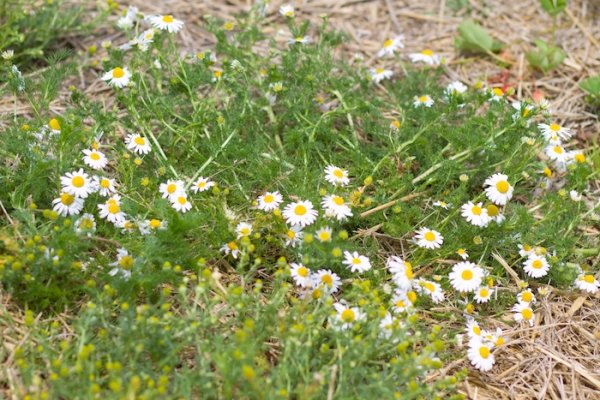
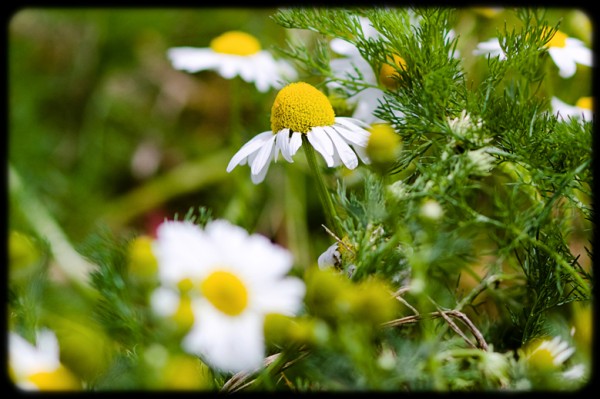
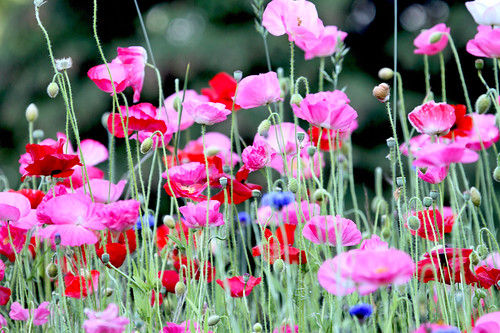
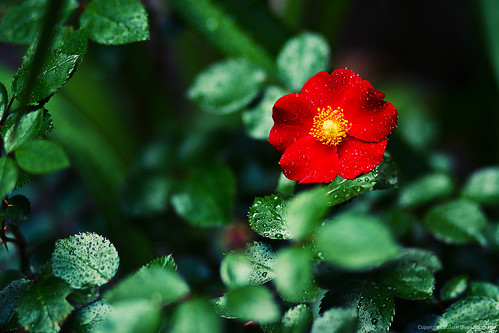
The following photos are borrowed from the Digital Photography School website Photographing Flowers by Elizabeth Halford, including comments and submitted pics at the end. The main tip is, get down close to where the flower lives, and experiment with not only macro, but zoom lens settings. Examples:


The patch of chamomile, above, doesn't tell the story the photographer wants to tell--it is too diffuse and far away.


By taking the photo above, in context, by using a macro blur to focus in on the blossom with the downward-facing petals, the photograph resulted in highlighting the relationship of the flowers within the clump.


The shot above was taken using a DSLR, using a  zoom lens looking up from a point lower on the hill where the poppies were growing.


You don't need to use macro for close up shots. The five-petal red rose, above, was taken from 2 feet away using a zoom lens.


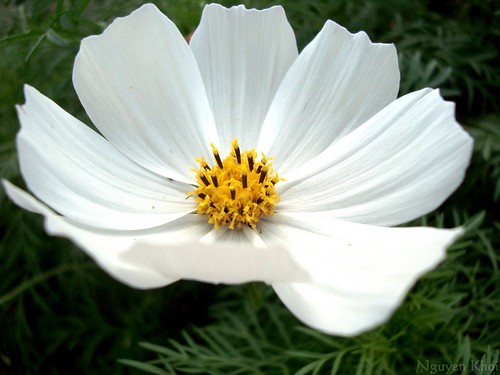
You don't necessarily need a DSLR, either. The clean white cosmos, above, was taken with a simple point and shoot camera.


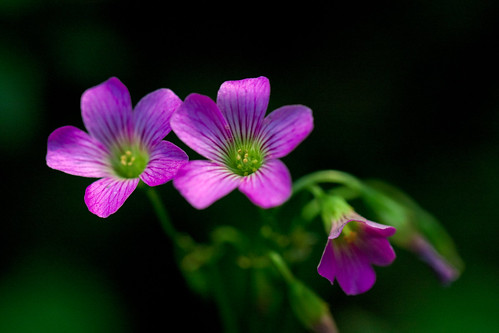
A fun close-up shot that tells the story of two upward-facing blossoms and one facing down.


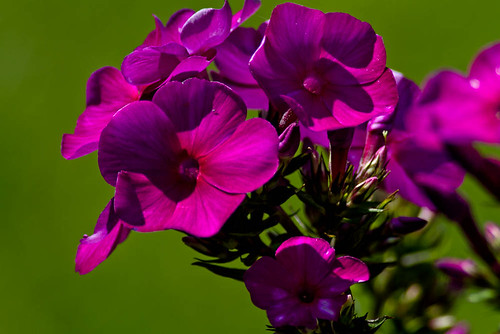
Another shot using telephoto, which does interesting things to the background of this bright pink phlox while allowing a close-up focus.


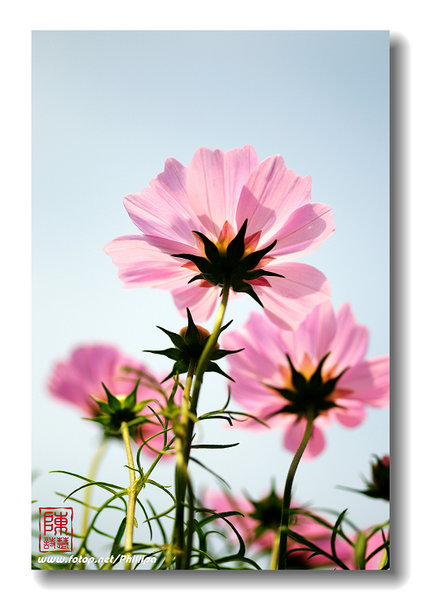
Beautiful ground-level shot of backlit pink petals.

See more submitted photos at Photographing Flowers - A How-To

Saturday, November 3, 2012

Royal Reds

Red attracts attention to itself, nowhere more than in the flower garden. It has to be used judiciously, but hints of red here and there throughout the garden can make it come alive.  Bright, velvet, eye-catching, commanding, dominating and enlivening--as well as a peerless accent and color enhancer. I love reds!


Red tulips light up spring bulb plantings


Breadbox poppies like stoplights in the garden


Early growth of the red-tip Photinia is a common sight all over the state of Oregon, where it grows readily.


Cinco de Mayo rose, usually shades of bright pink-red, shows more reddish in cooler weather. Red is such an intense brilliant color that shooting a photo in bright sunlight can result in high contrast and shadow.


The floribunda Cinnamon Twist, drawing attention to itself again. This was photographed in the shadow of a building so it would not reflect too much light.


One of the best of the Achillea Millefolium--Paprika, the intense red, drought-resistant and heat-loving milfoil yarrow 


One of many red roses in my yard. I have lost track of the varieties. They mostly grow very tall and very wide and are covered with these beauties.


Against the barbed-wire fence daylilies bloom in a smooth, dull, brick-red shade that matches the red-centered potentilla Miss Willmott growing up all around this corner of the garden. Miss Willmott spreads readily and reaches high, trying to be tall even though she is supposed to be a ground cover.


I couldn't resist including this photo of the annual salvia "Lipstick." It is a charmer wherever it is grown.


The Bloodgood Japanese maple against the backdrop of the elderberry Black Lace. More winter-hardy than most and fairly tall, this tree will stand cold winds that kill off less determined Japanese maples. The red color is especially lovely in the spring and later again in the cool of autumn.


Sunday, October 21, 2012

Indoor Flower Displays

The images below, from Apartment Therapy's How-To on displaying cut flowers, are a case study in indoor flower photography. You may come upon beautiful cut flower arrangements you can't resist photographing, or you may be an expert flower arranger yourself.  As you take photographs, pay close attention to the following:


Light source. In this photo, the bright light shines from straight above, making the defined shadows a large part of the color and shape of the composition. Be careful of white balance when using indoor lighting, especially fluorescent or incandescent light, which can lend a green or yellow cast to your photos.


The angle of the shot. This angle is low with the square vase turned with its corner toward the camera, giving more interest than a straight-sided shot.


Depth of field. I love this composition -- the colors and textures and shiny aqua and amber glass. I wonder about using a wider depth of field and how that would affect the clarity of the objects and thus the final effect of the photograph.


Pulling out from a closeup. Bringing the rustic table and chairs into the picture gives context to the simple vase of tulips. Again, a bright source of light from the window enhances the ambient light and emphasizes the contrast of light and shadow.


Coming in closer. Even if the shot ends up cutting some of the edges out, keeping the two main objects close to one another and keeping the camera close (or cropping for the same effect) gives an immediacy to this photo.

See  10 Easy Ways to Display Cut Flowers from Apartment Therapy website for more ideas.

Saturday, October 20, 2012

Violets & Purples Through the Season

One of the calmest and most blending of colors, the violets, lavenders and purples of the (mostly) shade garden suggest cool thoughts even on the hottest of summer days. Although violet-purple is a common flower color in the spring, it is surprising to add up all the lavender-hued flowers throughout the growing season:


One of the earliest of spring bloomers, Sweet Violets, Viola Odorata, grow and spread in my lawn, untouched by the lawnmower blades. These little beauties seem to like the sun, then disappear as it grows warmer. Pick a few of them to enjoy the scent, but the fragrance is short-lived, since the ionones, or rose ketones that give violets their scent, will numb your nose! 

I tried many photos of this plant, but finally had to get down flat on the ground to get a decent shot.


Bigger and more aggressive than the sweet violets, the Viola Riviniana, dog-violet, or the more harmonious-sounding Wood Violet, spreads its lovely color every nook and cranny and lawn and empty patch of soil it can fling its voluminous seeds to. These form clumps that are hard to remove! But we forgive them in the spring, just to see that color.


Purple rock cress, the spring Aubrieta that forms a mat of flowers accompanying narcissus and daffodil. The foliage makes a nice tidy green ground cover the rest of the season.


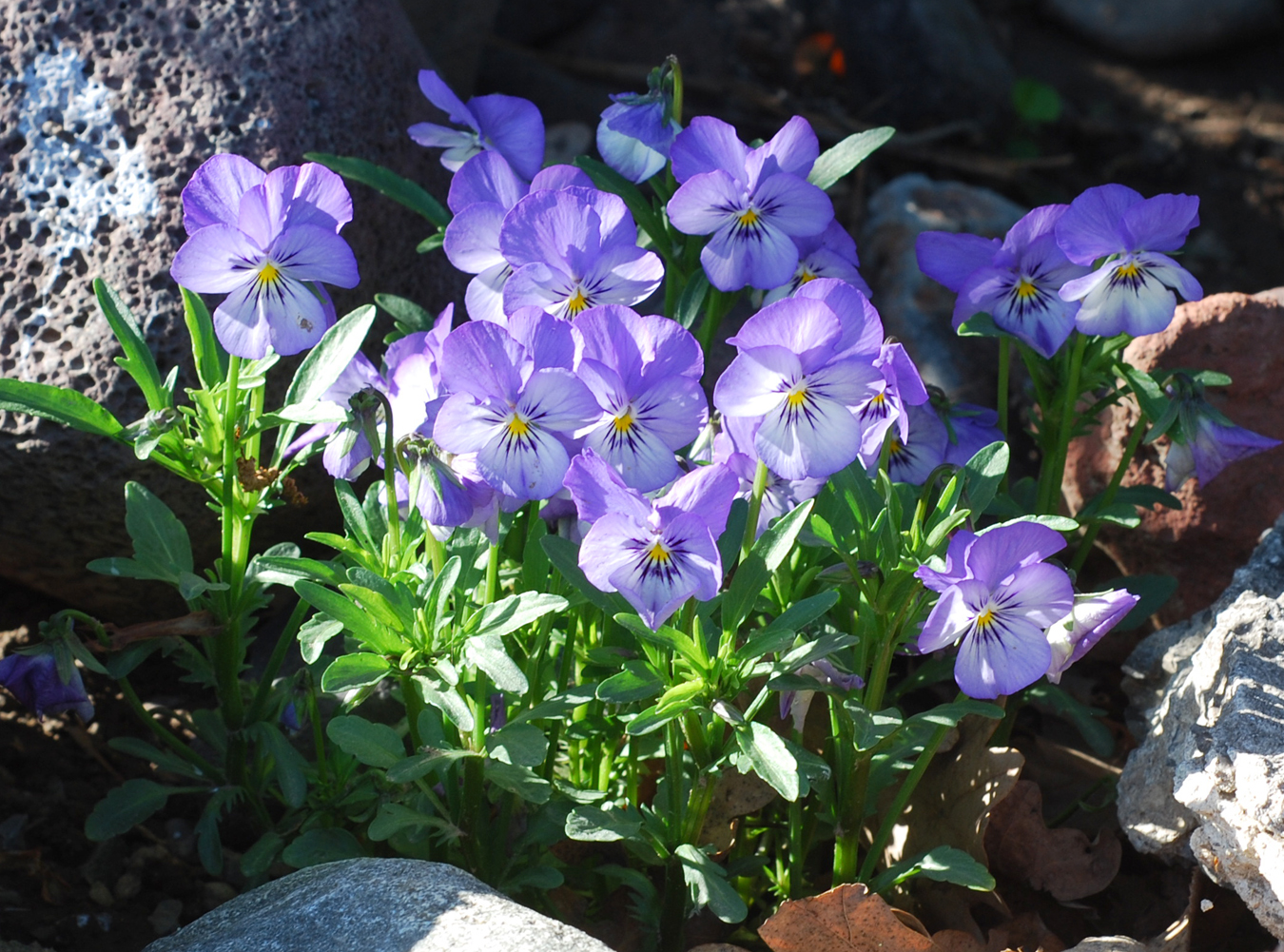
Common violas, which have intermingled and hybridized and flung themselves around the spring border with delight. These miniature lavender pansies grew between rocks in my driveway all summer long, fortunately shaded and well watered during the heat of the day. 


  Campanula, the bellflowers that form such interesting rock garden and border plants.


Lilacs, queen of the late spring garden


 Salvia and Lavender, two of the spiky purple plants. These are reliable in hot dry weather with a long season of bloom.


Velvety royal purple iris multiply quickly and form tight dense rhizomes. Since these are sun-loving plants, and these darker shades need the bright light of mid-day to photograph to capture the color intensity, it is often difficult to photograph them without having problems with brightness and contrast. These were taken on a cloudy day.


 Purple cardinal flower, Lobelia Cardinalis, likes its feet wet and filtered shade in the afternoon. These form spectacular clumps of tall spikes that need staking, or else they fold up accordion-fashion along the ground.


Adenophora lilifolia, the often-weedy Ladybells give much-needed color to the late summer shade garden. They are easy to pull up once they bloom, when the leaves wilt and turn brown in a rather unappealing way. A slender, tall plant like this is difficult to photograph since the flower color doesn't stand out. This photo was adjusted for color saturation.


Purple spires of the butterfly bush. Cut these bushes down to the ground in the spring like a large perennial. These grow in filtered shade for me. Another plant that is hard to do justice to in a photograph, especially the taller varieties.


Aster Frikartii, with some of the largest, most daisy-like blooms of all the perennial asters. Well-behaved with an eye-catching color that blends with every other color. Blooms for several months in later summer in full sun. A prime perennial plant. 


Common perennial aster that blooms in September and beyond. These plants cross-pollinate and pop up all over the sunny  border in little green shrubs that eventually form a sea of lilac-pink, pink, lavender, and darker purple-blue. Cut them back half way in mid-June to keep them from getting completely out of control. Perennial asters can be the mainstay of the autumn garden, often blooming long past first frost, and growing where chrysanthemums are too tender to endure.


I've tried to grow the quilly lavender-blue fleabane  Erigeron for a number of years now, and it's finally made  itself at home in my front border in semi-shade. With a long blooming season, a nice-looking, if somewhat floppy plant, perfect, fat little yellow centers, and this pretty blending color, it was worth the effort.